The Loopler Charm Tier List
Seventy charms, stack versus unique. Buy the multiplier that talks to your gates — skip the rest, even on sale.
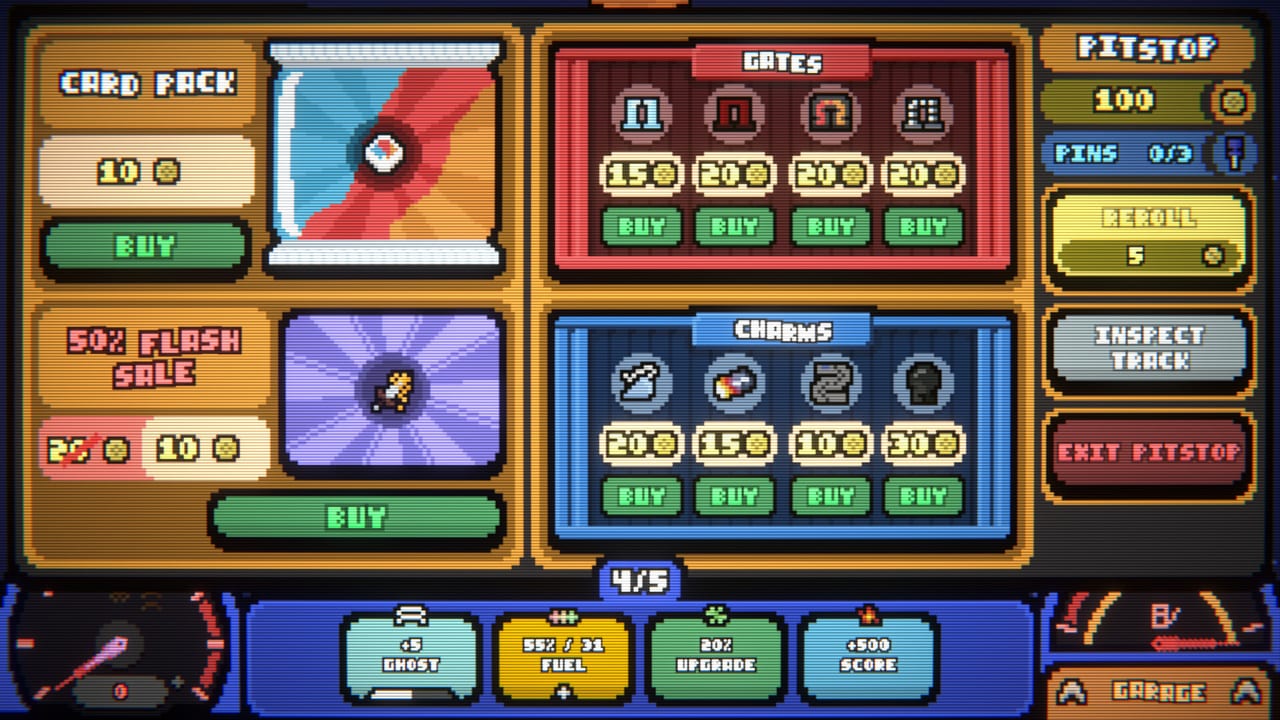
1.0 lists seventy charms. You will not see seventy in one pit stop, and you should not try. Charms are passive multipliers and rule-changers that sit under the card tray and the gate row. They are the third purchase, not the first. This page ranks how a charm behaves — stack, unique, goal-hike, reroll, drift, double-trigger — and names the confirmed pieces. It will not invent a fake seventy-row table. If a trinket is unnamed here, read two lines: does it stack, and does it talk to something you already own? Live text wins. The pit stop stopped spawning duplicate copies of charms that cannot stack; if you already hold a unique, reroll instead of staring at the same tile.
S/A/B/C is this patch’s pick priority, not a forever charm museum. S means it multiplies the engine you committed to. A means a clean support (price cut, extra reroll, small lucky chance) that does not split the run. B means a specialist for one track or a challenge modifier. C means skip even if the flash sale is 75% off — Skull is the teaching example. Demo players bought every trinket and went broke before round 4. Do not do that on Steam.
Stack versus unique
Every charm is one of two objects, and the pit stop now respects that:
- Stacking charms print a small number more than once. Coupon is the confirmed example: it became multiplicative rather than additive, so two Coupons are not “plus ten percent twice,” they compound. Gold-when-gaining-gold effects in this family are A on a shop-heavy twelve-round plan and C on a two-loop speed board. Buy a second stack only after the first stack is already doing work.
- Unique charms refuse a second copy. Unidentified-style “trigger a random card on looping” pieces and many rule-changers live here. The shop will not keep offering extras of a unique you already hold. If you want a different unique, reroll. If you already have the one you need, leave.
Stack text sits on the charm so you can see which tile it refers to. If you cannot tell stack from unique from the art, Inspect and read. Selling a unique to free a slot is correct when the new unique actually talks to the row; selling a stack that is already multiplying Score is how people throw a score build.
Confirmed high-priority charms
Coupon — S as the first shop charm, A afterwards. Multiplicative pit-stop discount. Buy it before you buy the expensive row, not after. Two Coupons are why later packs feel cheap; zero Coupons are why you skip a useful gate to “save gold” and then lose the round. It does not finish a track. It buys the engine.
Double-trigger (gates 10% chance to fire twice) — S on any row with three or more paying gates, C on empty tarmac. This is the charm that turns a gate sentence into a jackpot. Boost-first rows love it. Score-spam rows love it more. Ghost rows love it if the copies also hit. Do not buy it as your first charm when you still have one Boost in slot one and five blanks.
Sick Drift — A on drift layouts, C on ovals that never slide. Demo notes mention Sick Drift visually adding time to drift cards and, in play, drift cards triggering more often or twice. If you drafted Golden Drift or other on-drift cards, this is A. If your car has no Drift Grip and the track does not slide, skip it. The name is not a free S.
Pacifier — A on high difficulty and challenge modifiers, B on easy twelve-round clears. −10% goal. That is a clean number. Take it when the bar is already scaring you or when a daily hikes the contract. On the easiest setting with a working speed build, the gold often wants to be a gate instead.
Skull — C almost always, B only when a challenge pays you to hold it. +10% goal. It is a handicap charm. It existed as a daily and weekly exclusive in the demo for a reason: the challenge is the point. If a 1.0 pit stop offers Skull in a normal run, skip it. Do not “collect” it.
Trade Requisition — A when the shop is the run, C when you are not rerolling. +1 reroll charge, and reroll cost increases 5× when you use it. Demo locked this to daily and weekly play. If 1.0 still gates it behind challenges, treat it as a challenge tool. If it appears in a normal pit stop, take it only when you already know you will reroll for a specific gate. Paying 5× to fish is how gold dies.
Lucky-chance charms (clover-style +5% pieces) are A once a Lucky gate is planted and C before that. Goal-cut cousins of Pacifier stay A. Rule-changers that trigger a random card on loop are B until the tray is a single engine — random is how you accidentally fire a leftover gold card instead of Loopler.
Daily exclusives and when to skip
Demo dailies and weeklies used Trade Requisition, Skull, and Pacifier as exclusive tiles so the challenge felt different from a normal twelve-round. 1.0 still has daily and weekly challenges plus five unique challenge modes. Before you copy a charm rank from a normal run into a daily, read the modifier. A Skull that is forced on you is not a shop error; it is the assignment. A Pacifier offered in that same shop is then S, not A.
Skip rules that survive every patch:
- Skip a charm that does nothing until you own gates, if you do not own gates.
- Skip a unique you already hold. The shop will not usefully duplicate it.
- Skip Skull in a normal run. The +10% goal is not a spicy build; it is a smaller chance to see the next pit stop.
- Skip drift charms on non-drift tracks, ghost-duration charms with no ghost gate, and lucky-chance charms with no Lucky slot.
- Skip a flash sale that is off-engine even at 75% off. Cheap C is still C. Spend the gold on a card pack or a matching gate.
Buy order in a healthy pit stop is still gate → card pack → charm. Reverse that only when Coupon is on sale and you are about to spend a pile, or when Pacifier is the difference between dying on the current goal and seeing round 12. The synergy planner is a checklist for that order. For first-hour skip discipline, Getting Started is stricter than a letter. For challenge-specific charms, use Challenges instead of this list. Charms do not replace the car identity or the garage radar; a Coupon on a body that cannot finish round 6 is a prettier loss.
Frequently Asked Questions
Quick answers to the most common questions.
Do all 70 charms stack?
No. Some stack, some are unique. The pit stop no longer spawns duplicate non-stacking charms. Read the stack text. Coupon is multiplicative; uniques should be rerolled past, not bought twice.
Should I buy Skull for the extra challenge?
Not in a normal run. Skull is +10% goal and was a daily/weekly exclusive in the demo. Take it when a challenge assigns it, skip it in the open pit stop.
Is Trade Requisition always worth the extra reroll?
Only if you will actually reroll. The 5× cost is the tax. It is A on a shop-heavy plan and C if you already know the next buy. Check whether 1.0 still locks it to dailies.
When is a charm a skip even on sale?
Should charms be my first pit-stop purchase?
No. Buy a matching gate, then a card pack if the engine has a hole, then a charm that multiplies that sentence. Getting Started covers that order.