The Loopler Guides
From the first pit stop to Infinity Mode — tutorials that match how the Steam build actually plays.
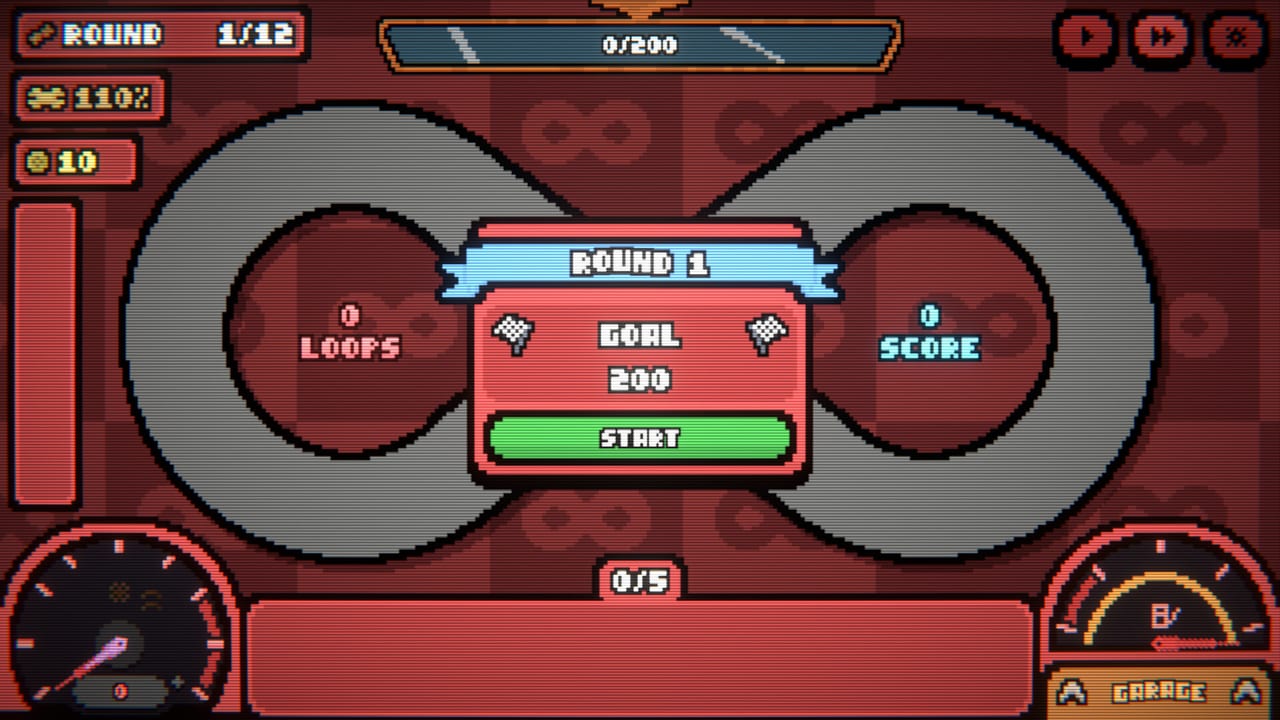
This hub is the map for every The Loopler tutorial on the wiki. The game looks like a toy slot-car set; the decisions are a deckbuilder. You watch a car loop, you spend gold in the pit stop, and you try to outrun a score goal that climbs every round. If you bounce off the first hour, start with Getting Started and How to Play. If you already understand fuel and gates, skip to a committed speed build, ghost build, or score build.
What these guides assume
The Loopler launched on Steam on September 11, 2026 as a single-player roguelite deckbuilder from Mheep, published with Zero Percent. The 1.0 roster is nine cars, nine tracks, five difficulties, fifty cards, thirty gates, and seventy charms, plus daily and weekly challenges, a loadout system, and Infinity Mode. The free demo that ran through Next Fest is a smaller slice of that list. These pages describe the full Steam game first, then call out demo-era lessons when they still apply.
You do not steer. Mouse, controller, and touch all work because the car drives itself. Your job is to draft cards, place gates in the right order, and stack charms that turn one loop into a chain reaction. Durability and fuel are the fail states. Gold is the shop resource. Speed, ghosts, and raw score are the three ways people actually win.
First hour
- Finish a few easy rounds without restarting the second you see a rare pack. Learn what a loop is worth and how the goal steps up.
- Read Getting Started so meta XP, garage parts, and loadout slots are not a mystery.
- Use How to Play as the HUD glossary: speed, boost, fuel, durability, lucky chance, and the pit stop.
- Play one full walkthrough with a single plan instead of grabbing every shiny card.
Builds and endgame
A Loopler run dies when you mix engines. Boost-plus-refuel, ghost swarms, and score-gate stacks all work; two half-engines usually do not. Pick a lane:
- Speed build — boost gates first, speed per loop, ignore most score cards, race the lowest-loops boards.
- Ghost build — extra cars, duration, and ghost gates so every pass hits twice.
- Score build — score gates, on-pass value, and charms that multiply the number you already print.
- Fuel build — refuel-on-loop, Reserve Tank, and Efficiency as support so speed, ghost, and score engines survive the tank.
When the first tracks feel solved, How to Go Infinite covers Infinity Mode breakpoints, and Challenges covers dailies, weeklies, and the five unique challenge modes. Loadout and meta is the garage layer that makes those runs repeatable.
How to use the rest of the wiki
Tutorials here link into ranking pages, not the other way around. After you know what a gate slot is, open the card tier list, gate tier list, charm tier list, car tier list, and tracks. The synergy planner is a checklist you can keep next to the pit stop. Launch notes record what 1.0 added on top of the demo. For Discord, Steam, and itch, use official links.
A note on videos
Several guides embed one real YouTube run in the middle of the article. Demo footage still teaches routing and shop discipline; numbers and card ranks may have shifted for 1.0. If a video and a page disagree on a value, trust the current Steam tooltip and this wiki’s 1.0 framing.
If you only open one page after this hub, make it Getting Started. The loop is generous once you stop treating it like a racer and start treating it like a deck.
Frequently Asked Questions
Quick answers to the most common questions.
Which The Loopler guide should I read first?
Start with Getting Started and How to Play. Jump to a build page only after you can explain fuel, durability, and why gate order matters.
Do I need the demo before the full game?
No. The Steam 1.0 build is the version these guides target. The demo is useful practice, but progress does not carry over and several systems were reworked for launch.